
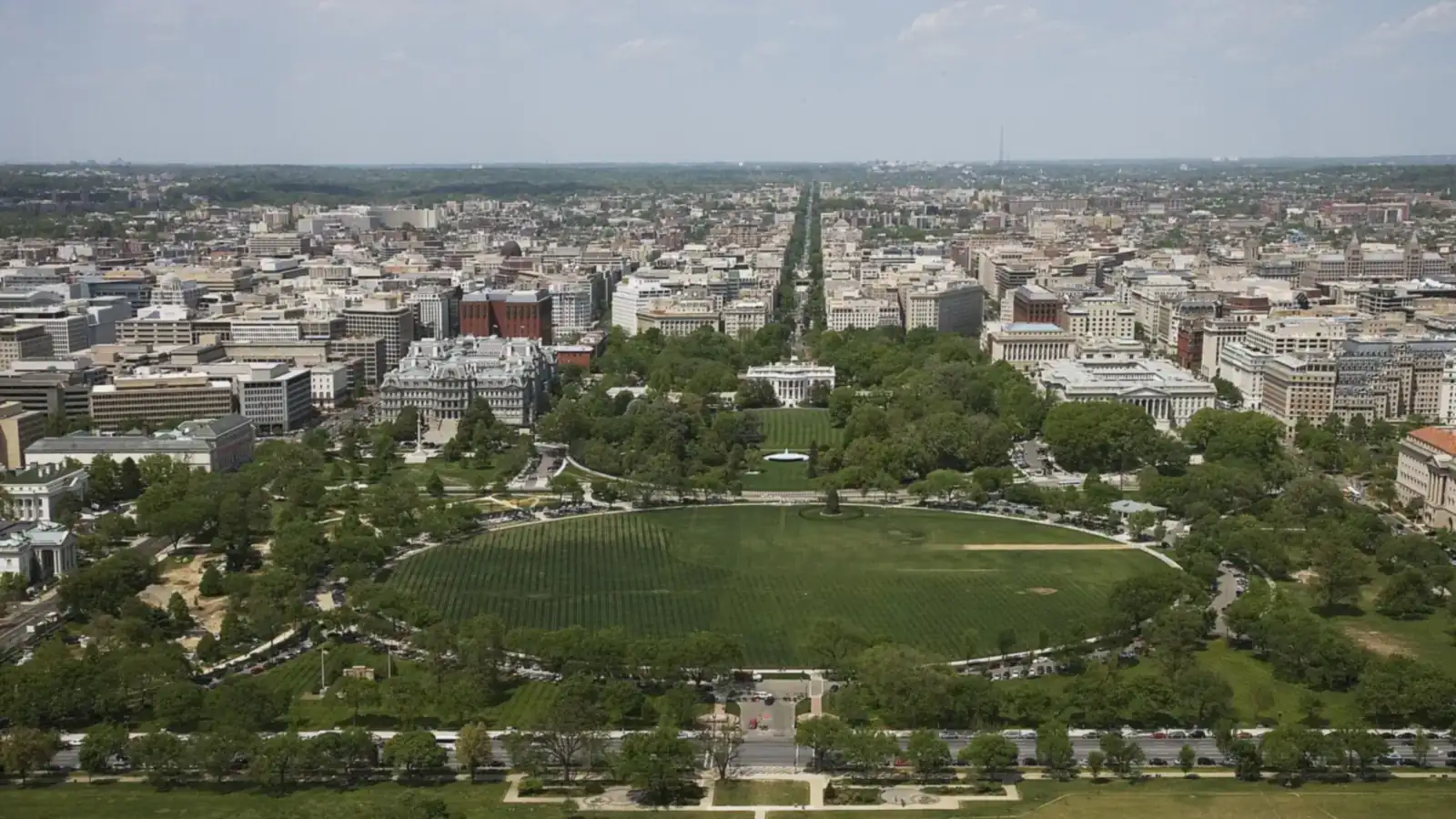
Photo: Carol M. Highsmith, Public domain, via Wikimedia Commons
Credit repair in Washington, DC
Credit Professional Services offers credit repair to people in Washington, D.C. by phone: one free call to read your three credit reports together, a clear list of anything that looks inaccurate, incomplete or unverifiable, and no enrollment on that call. We have no office in the District, and this page is about D.C., not Washington state.
- Free consultation
- Equifax, Experian and TransUnion reviewed
- Only inaccurate or unverifiable items disputed
- Your rights explained in plain words
Credit repair in Washington: the local numbers
- 681,294Residents
- $109,870Median household income
- 58.5%Homes that are rented
- 46.6%Renters paying 30%+ of income on rent
- $737,100Median home value
- $1,954Median monthly rent
- 15.4%Residents below the poverty line
- 6.3%Unemployment rate
Main ZIP codes in Washington: 20002, 20003, 20007, 20008, 20011, 20015, 20016, 20017, 20018, 20019, 20020, 20032
Sources: U.S. Census Bureau, American Community Survey 2024 5-year estimates for Washington city, District of Columbia; 2020 ZCTA-to-place relationship file (ZIP codes). Retrieved 2026-10-18.
How does living without a car change credit repair in Washington, DC?
It changes what is on the file. Over a third of District households have no vehicle, so many residents reach their thirties with no auto loan at all. A report built mostly from rent, cards and student loans has fewer accounts to absorb a mistake, and each error stands out more.
- Households with no vehicle
- 36.0%
- Homes that are rented
- 58.5%
- Adults 25+ with a bachelor's or higher
- 64.2%
- Median age
- 34.9
Source: U.S. Census Bureau, American Community Survey 2024 5-year estimates for Washington city, District of Columbia, retrieved 2026-10-18.
That pattern shows up on our calls. People reach out before a first car loan, often after a move or a new job makes transit harder, and they want to know what the lender will see.
What we check before a District resident applies for a first auto loan
- Card accounts: limits, balances and any late marks, since these may be the longest history on the file.
- Student loans: one listing per loan, the right servicer, and a status that matches your records.
- Rental collections from a past lease, including the date of first delinquency.
- Inquiries from lenders or dealers you never applied with.
- Your name, past addresses and other personal details, which can mix your file with someone else's.
Example: a hypothetical renter who has always taken the train plans to buy a used car. Her report shows a closed store card as open with a balance. Her closing letter makes that a fair item to dispute. Her accurate student loan history, including one real late payment, stays as it is.
Why does renting in the District make a clean report worth checking?
Applications come up often. With a median gross rent of $1,954 and 46.6% of renters paying 30% or more of income on housing, a lease application is one of the most common reasons a D.C. report gets pulled. Owners face a different stake: the median home value is $737,100 on housing with a median build year of 1958.
Money strain is real here too. Unemployment stood at 6.3% and 15.4% of residents lived below the poverty line in the latest estimates, even with a median household income of $109,870. Strain like that is where late payments and collections usually begin, so we read both closely.
What do D.C. consumers report about their credit files?
Mainly incorrect information. The CFPB received 15,073 credit reporting complaints from District consumers in 2025. It does not verify those complaints, so they describe what people reported.
| Issue | D.C., 2025 |
|---|---|
| Incorrect information on your report | 8,318 |
| Improper use of your report | 3,794 |
| Problem with a company's investigation into an existing problem | 2,802 |
| Debt collection complaints | 639 |
Source: CFPB Consumer Complaint Database, complaints received in 2025, retrieved 2026-10-18.
Which federal rules apply to a dispute from Washington, DC?
The same ones that apply everywhere. A bureau must investigate a dispute free of charge, generally within 30 days, and may take up to 15 more in some cases. The company that furnished the data must investigate and report back. Most negative information can stay for seven years and bankruptcy for ten, per the FTC.
You can file the dispute yourself; the FTC says disputing mistakes is free. If you hire a company, it may not take payment before the work is fully performed, and you can cancel within 3 business days. See your rights in plain language and a walk-through of the dispute process.
What we will not do: we will not tell a D.C. caller that a real late payment can be argued away, promise a car dealer's approval, or file a dispute you know to be untrue. Accurate, current and verifiable information remains on a report; our work is limited to entries that look inaccurate, incomplete, unverifiable or past their reporting period.
Which nearby cities have their own credit repair pages?
Baltimore is about 35 miles away; read credit repair in Baltimore. Philadelphia is roughly 126 miles away, on our Philadelphia page. For others, see all of our locations, and for building positive history, cards people use to build credit.
Credit help in and around Washington
Nearby cities we serve
- Credit repair in Baltimore35 mi
- Credit repair in Philadelphia126 mi
- Credit repair in Virginia Beach156 mi
- Credit repair in New York204 mi
Free local and national resources
- Free credit reports: one from each bureau every week at AnnualCreditReport.com (FTC, June 2026).
- Complaints about a credit report: the CFPB complaint portal.
- Housing counseling: HUD-approved agencies, often at little or no cost, through the CFPB counselor finder.
- Consumer protection in District of Columbia: your state attorney general, listed on NAAG's Find my AG.
- Your rights: what federal law lets you do yourself, for free.
How a review works
- Free callWe talk through your reports and your goal.
- Three-bureau reviewEach account sorted: possibly wrong, possibly unverifiable, accurate.
- Disputes, if you sign upOnly items that look inaccurate, incomplete or unverifiable.
- Follow-upBureaus generally have 30 days to investigate; we explain each result.
Questions from District callers
Is this page for Washington state or Washington, D.C.?
This page covers Washington, D.C., and every figure on it comes from Census and CFPB data for the District. Searches from Seattle and Tacoma also land here. Because consultations happen by phone, anyone can call and ask whether we can help where they live; the numbers here just will not describe Washington state.
I have never owned a car. Will my first auto loan be harder to get?
A file without auto history is not a bad file, but a lender has less to go on, so each account you do have carries more weight. That makes accuracy on your cards, student loans and any rental collections more important before you apply. A review shows you what the lender will see first.
Do student loans need special attention on a D.C. report?
They often are the biggest lines on the file here, since 64.2% of adults over 25 hold at least a bachelor's degree. We compare each loan's balance, status and servicer with your own records. Accurate history stays; duplicate listings after a transfer or wrong late marks during an approved pause are worth disputing.
How many credit reporting complaints came from D.C. in 2025?
The CFPB received 15,073 credit reporting complaints from District consumers in 2025, along with 639 about debt collection. Incorrect information was the most common issue, at 8,318. The CFPB does not verify the complaints it publishes, so these describe reported problems rather than confirmed errors.
Do you have an office in the District where I can drop off documents?
No. Credit Professional Services has no Washington, D.C. office, and you never need to drop anything off. During the free call we read your reports together. If you later dispute, on your own or with us, you send copies of supporting documents, never originals.
What can I do if I think someone pulled my report without a reason?
Check the inquiry section of each report for names you do not recognize. Improper use of a report was the second most common complaint issue from D.C. consumers in 2025. You can dispute an inquiry that is not yours with the bureau, and you can also file a complaint with the CFPB after disputing directly.
Start with what is actually on your reports
The first conversation is free. We sort each account into possibly wrong, possibly unverifiable and accurate, and explain your options, including the free ones.
Not sure what your credit reports say?
A consultation costs nothing and commits you to nothing. We read the reports with you, point out entries that look wrong or unverifiable, and tell you which steps you can take on your own.